
If your son is a junior or senior and the phone still isn’t ringing, take a breath — you’re not alone.
Every year, thousands of talented players (and families who’ve done “everything right”) find themselves wondering:
“Why isn’t anyone calling?”
Silence from coaches doesn’t always mean your son isn’t good enough. More often, it means something in the process is off — exposure, communication, timing, or simply targeting the wrong programs.
This guide breaks down the 10 most common reasons players don’t hear from coaches… and exactly how to fix each one so you can get back on track.
Let’s get into it.
1. You’re Sending Emails at the Wrong Times
Why it matters:
College baseball recruiting follows strict contact periods and seasonal priorities. If you email a coach mid-season or during a dead period, your message lands in the pile.
Fix it:
- Know the contact windows (September 1 of junior year).
- Send updates at key times: preseason, post-event, and right before major recruiting cycles.
- Use summer between junior and senior year as your “push” window.
2. You’re Playing Everywhere… Except Where the Right Coaches Are
Why it matters:
Travel ball ≠ meaningful exposure. Coaches attend specific tournaments, showcases, and camps — often based on location, budget, and roster needs.
Fix it:
- Prioritize college-run camps and verified showcase events.
- Ask tournament directors which schools actually attend.
- Invest in targeted events, not high-volume ones.
Tip: If you get invited to one of these showcases…you’re a dude.
3. Emails Are Coming From Parents — Not the Player
Why it matters:
Coaches evaluate maturity and communication just as much as talent. They expect to hear from the player, not mom or dad.
Fix it:
- Let your son write and send all emails.
- You can help draft, edit, and guide — but he must hit send.
- Coaches want athletes who advocate for themselves.
4. Your Recruiting Video Isn’t Coach-Friendly
Why it matters:
Coaches watch hundreds of videos. If yours is long, unedited, low quality, or slow to load, it gets skipped.
Fix it:
- Create a 90–180 second highlight with best clips first.
- Use wide, steady angles and clear labels (EV, velocity, etc.).
- Include one simple link in every email — no logins required.
5. Academics Raise Questions (or Aren’t Listed at All)
Why it matters:
Coaches won’t pursue a player they aren’t confident can stay eligible or get accepted. GPA uncertainty equals a hard stop.
Fix it:
- Clearly list GPA, course load, and test plans on your profile.
- If grades were low, explain what changed and why.
- Good academics widen your options more than any metric.
6. You’re Not Targeting the Right Programs
Why it matters:
Just because your son is talented doesn’t mean he fits every roster. Coaches recruit by specific roles, body types, class needs, and long-term development plans.
Fix it:
Build a target list of 15–25 programs across:
- Reach schools
- Realistic fit schools
- High-probability options
And personalize every email with something unique about the program.
7. You Don’t Have Enough Consistent, Game-Based Evidence
Why it matters:
One good showcase isn’t proof. Coaches want sustained improvement and reliable game performance.
Fix it:
- Track metrics monthly.
- Upload fresh clips every 4–6 weeks.
- Highlight improvements — not perfection.
8. Your Son’s Social Media Hurts (or Doesn’t Help)
Why it matters:
Coaches do check social media. Immature posts or a messy profile can tank interest. But a clean feed with updated clips? That can spark it.
Fix it:
- Clean up posts and comments.
- Use X/Instagram to post short game or training clips.
- Add a simple bio: Name | Grad Year | Position | Video Link
Tip: Here is an article on how to create an effective X (Twitter) profile.
9. The Outreach Is Generic and Easy to Ignore
Why it matters:
Coaches delete mass emails instantly. If you’re sending six-paragraph essays with no personalization, you’re invisible.
Fix it:
Keep it simple:
- 3–4 short sentences
- A personalized reason for interest
- A clean video link
- Key metrics + GPA
- A short, polite ask for feedback or camp dates
10. Your Son’s Metrics Aren’t at Recruitable Levels (Yet)
Why it matters:
Coaches recruit tools. If your son’s measurables fall below the typical range for his desired level, calls stall.
This doesn’t mean his journey is over — it just means development must become the priority.
Fix it:
- Get a baseline with a Player Grade Tool or verified showcase.
- Build a 12–16 week development plan around the gaps (speed, strength, arm, EV, etc.).
- Re-test and send updated numbers every 4–6 weeks.
Improvement gets attention — even late.
What You Can Do This Week to Get Back on Track
Here’s a simple 7-day plan:
Day 1: Build/update the recruiting profile
Day 2: Film a clean highlight video
Day 3: Create a new target school list
Day 4: Draft 5 personalized emails
Day 5: Clean social profiles
Day 6: Upload 1–2 short clips (IG/X/TikTok)
Day 7: Send all outreach from your player, not you
Repeat this weekly through summer and fall, and you’ll be shocked at the momentum you build.
If your son isn’t getting calls — don’t panic.
The silence isn’t the end.
It’s usually a sign that a few pieces in the process need tightening up.
Fix the profile, fix the video, fix the targeting, fix the communication… and things change fast.
And if you need a clean, honest baseline of where your son stands right now, the Player Grade Tool at Beyond the Dugout is the perfect place to start.
You’ve got this — stay consistent, stay intentional, and keep progressing.
Ready to Take the Guesswork Out of Recruiting?
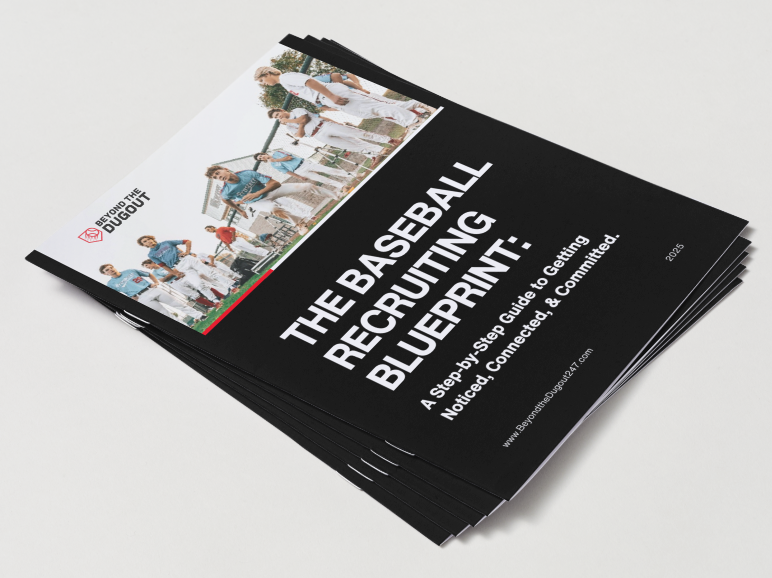
If you’re a parent or player navigating the recruiting process, check out my eBook .—
The Baseball Recruiting Blueprint: Practical Tips & Insights to Help You Navigate the Recruiting Process
It’s a step-by-step guide built from real experience — written by a parent currently going through the process. Learn how to get noticed, communicate with coaches the right way, and make confident decisions for your player’s future.